
What Is Oxidized Bitumen and Where Is It Used?
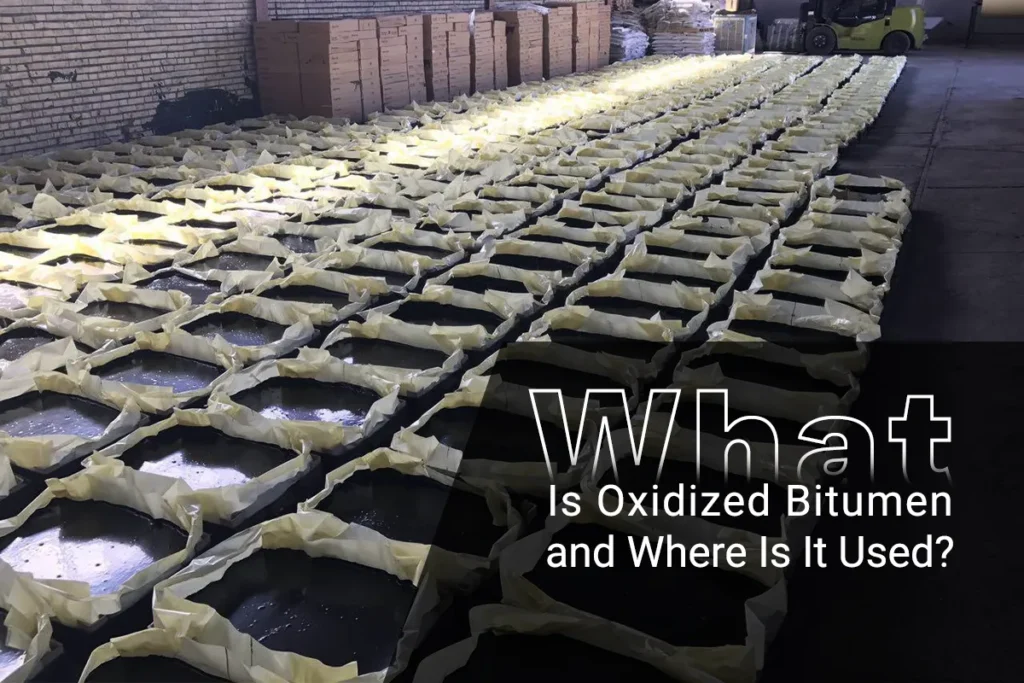
Oxidized bitumen, also known as blown bitumen, is a specialized form of bitumen produced by passing air through conventional bitumen at elevated temperatures. This controlled oxidation process changes the physical properties of the material, increasing its softening point and improving its resistance to heat and deformation.
Because of these properties, oxidized bitumen is widely used in industrial applications where conventional penetration-grade bitumen may not provide the required performance.
How Is Oxidized Bitumen Produced?
Oxidized bitumen is produced through a process known as air blowing. During this process, hot bitumen is exposed to a controlled flow of air.
The oxidation reaction changes the structure of the bitumen and increases its softening point while generally reducing penetration. The final properties depend on factors such as the starting bitumen, temperature, processing conditions, and degree of oxidation.
Oxidized bitumen is commonly classified using grades such as R85/25, R90/10, R115/15, and R150/5, where the numbers indicate key penetration and softening-point characteristics.
Key Properties of Oxidized Bitumen
One of the main characteristics of oxidized bitumen is its higher softening point compared with conventional paving bitumen. This allows it to maintain its performance under elevated temperatures.
It also offers good resistance to deformation and can provide strong adhesion and water-resistant properties. Depending on the grade, oxidized bitumen can also provide suitable flexibility and durability for demanding industrial applications.
Where Is Oxidized Bitumen Used?
Oxidized bitumen is used in a wide range of industrial and construction applications.
Roofing and Waterproofing
One of the most common applications is roofing and waterproofing. Oxidized bitumen can be used in waterproofing membranes, roofing compounds, and protective coatings because of its resistance to water and heat.
Pipe Coatings
Oxidized bitumen is used in protective coatings for pipes and pipelines. Its adhesion and water-resistant properties can help protect surfaces from moisture and environmental exposure.
Industrial Flooring
Certain oxidized bitumen grades are used in industrial flooring and protective systems where resistance to heat, chemicals, and mechanical stress is required.
Adhesives and Sealants
Oxidized bitumen can be incorporated into industrial adhesives, mastics, and sealants. Its controlled softening characteristics and adhesion properties make it useful for sealing and bonding applications.
Electrical Applications
Some grades of oxidized bitumen are used in electrical and cable-related applications where insulating and moisture-resistant properties are required.
Corrosion Protection
Oxidized bitumen coatings can be used to provide protective barriers against moisture and environmental exposure, particularly in industrial and infrastructure applications.
Read More: How to Compare Bitumen Suppliers Effectively
How to Choose the Right Oxidized Bitumen Grade
The appropriate grade depends on the intended application and required performance characteristics. Buyers should consider softening point, penetration, operating temperature, flexibility requirements, chemical exposure, and application method.
For international procurement, technical specifications should be confirmed before ordering to ensure that the supplied grade matches the project’s requirements.
How SAEN Supports Oxidized Bitumen Supply
SAEN supplies bitumen products to international markets and supports industrial buyers with sourcing, export coordination, packaging, and logistics solutions.
For buyers requiring oxidized bitumen, selecting the appropriate grade and delivery format is an important part of the procurement process. SAEN can support customers in identifying suitable supply options according to application, quantity, destination, and technical requirements. Contact us for further information.
Final Thoughts
Oxidized bitumen is a specialized bitumen product designed for applications where higher softening points, heat resistance, adhesion, and resistance to deformation are important.
From roofing and waterproofing to pipe coatings, sealants, flooring, and corrosion protection, its properties make it suitable for a wide range of industrial applications. Selecting the correct grade is essential for achieving the required performance and ensuring that the product is suitable for the intended application.
Leave a Reply