
How to Compare Bitumen Suppliers Effectively
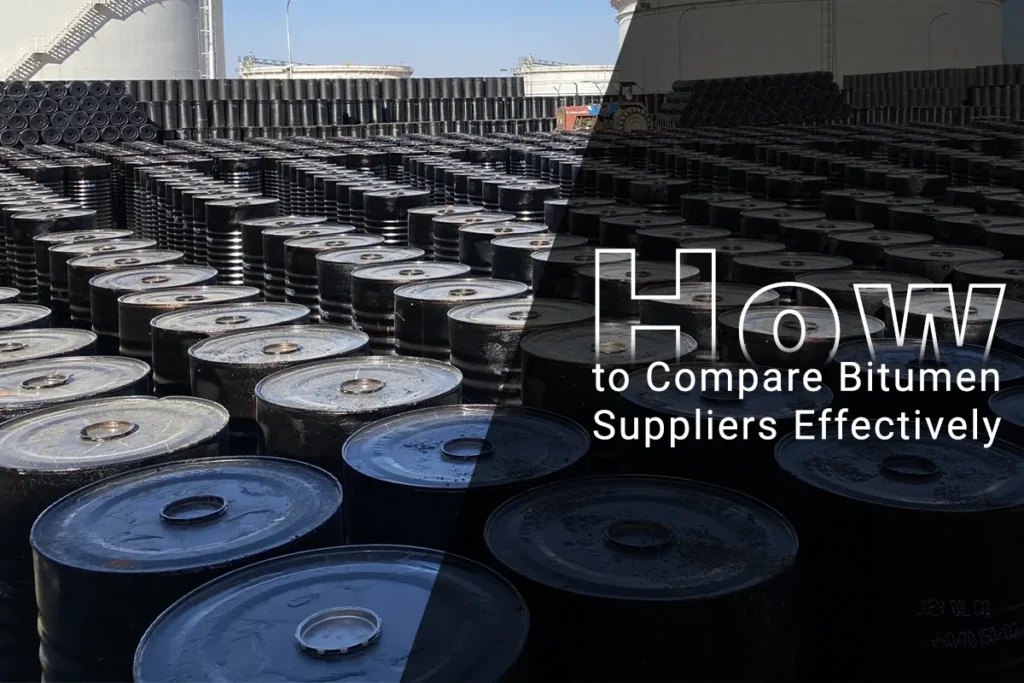
Choosing a bitumen supplier is an important decision for contractors, asphalt producers, distributors, and infrastructure companies. The lowest quotation does not necessarily represent the best procurement option. Product quality, technical specifications, delivery reliability, documentation, and commercial terms can all affect the real cost and performance of a bitumen purchase.
A structured comparison allows buyers to evaluate suppliers based on the factors that matter most to their project.
Check Bitumen Quality and Specifications
The first step is to verify whether the supplier can provide the required bitumen grade and specifications. Buyers should compare technical data, relevant standards, test certificates, and product consistency rather than relying only on the product name.
The selected grade should also match the intended application, climate, traffic conditions, and project requirements.
Compare Product Pricing
Price is an important factor, but it should be evaluated together with the complete commercial offer. Buyers should confirm whether the quotation is based on FOB, CIF, or another delivery term and identify what is included in the quoted price.
Packaging, freight, insurance, port charges, and other applicable costs can significantly affect the final landed cost.
Read More: Bitumen Price Forecast: Factors That Influence Global Markets
Evaluate Supply Capacity
A supplier should be able to provide the required quantity within the project’s timeframe. This becomes particularly important for large infrastructure projects that require regular or high-volume deliveries.
Ask suppliers about available quantities, production or sourcing capacity, minimum order quantities, and their ability to support repeat shipments.
Review Delivery and Logistics Capabilities
International bitumen procurement involves more than purchasing the product. Shipping arrangements, packaging, documentation, port handling, and delivery schedules can all affect project timelines.
Suppliers with established international logistics capabilities may be better positioned to coordinate shipments according to the buyer’s destination and requirements.
Check Documentation and Compliance
Reliable suppliers should be able to provide appropriate commercial and technical documentation. Depending on the transaction, buyers may require product specifications, certificates of analysis, certificates of origin, invoices, packing documents, and shipping documentation.
Clear documentation can reduce delays during customs clearance and receiving procedures.
Examine Payment and Contract Terms
Payment conditions can have a significant impact on procurement risk and cash flow. Buyers should compare payment methods, advance payment requirements, credit terms where available, contract conditions, and responsibilities under the agreed Incoterm.
The terms should be reviewed alongside price rather than separately.
Consider Packaging Options
Bitumen may be supplied in different formats depending on the project and transportation requirements. Drums, jumbo bags, and bulk shipments each have different handling and logistics considerations.
The right supplier should be able to offer a packaging solution appropriate for the buyer’s storage facilities, transportation method, and application.
Assess Supplier Reliability
A supplier’s ability to deliver consistently is particularly important for long-term projects. Buyers should consider the supplier’s experience in international trade, communication process, shipment coordination, and ability to handle repeat orders.
A supplier that communicates clearly and provides realistic delivery commitments can help reduce procurement uncertainty.
Read More: Bulk Urea Storage Best Practices
Compare the Total Cost, Not Just the Quotation
The most useful comparison is based on total procurement cost rather than the initial price per metric ton.
A practical comparison should consider:
| Factor | What to Compare |
|---|---|
| Product | Grade and technical specifications |
| Price | Cost per metric ton |
| Delivery | FOB, CIF, or other terms |
| Freight | Shipping and transportation costs |
| Packaging | Drum, jumbo bag, or bulk |
| Documentation | Certificates and export documents |
| Quantity | MOQ and available supply |
| Payment | Payment and contract conditions |
| Reliability | Delivery consistency and communication |
Common Mistakes When Comparing Suppliers
One common mistake is choosing a supplier solely because of a lower quotation. A cheaper product may have different specifications, packaging conditions, delivery terms, or additional costs that make the final purchase less economical.
Another mistake is comparing different grades or delivery terms as if they were identical. Buyers should make sure they are comparing equivalent products under comparable commercial conditions.
Ignoring logistics and documentation can also create unexpected costs and delays, especially in international transactions.
How SAEN Supports Bitumen Buyers
SAEN supplies bitumen to international markets and supports buyers with product sourcing, export coordination, packaging options, and international logistics.
For buyers comparing different suppliers, SAEN can provide quotations based on project requirements, destination, quantity, product grade, and delivery conditions. This allows the commercial offer to be evaluated as part of the buyer’s overall procurement requirements rather than based on price alone. Contact SAEN for further information.
Final Thoughts
Comparing bitumen suppliers effectively requires a broader view than simply checking the price per metric ton. Product quality, technical specifications, supply capacity, logistics, documentation, payment terms, packaging, and delivery reliability should all be considered.
By comparing suppliers on consistent criteria and calculating the total procurement cost, buyers can make more informed purchasing decisions and reduce avoidable risks in international bitumen procurement.
Leave a Reply