
Modified Bitumen vs Conventional Bitumen: Key Differences
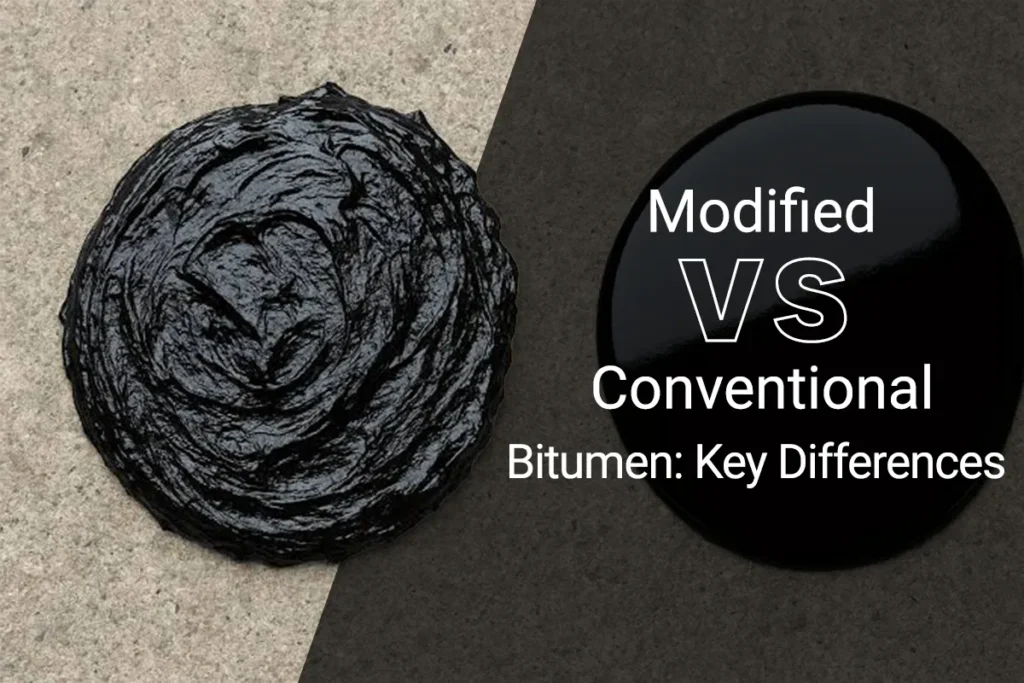
Bitumen is a fundamental material in road construction, waterproofing, and infrastructure projects. However, not every pavement project has the same performance requirements. While conventional bitumen remains widely used for standard asphalt applications, modified bitumen has been developed to provide improved performance under demanding traffic and environmental conditions.
For contractors, road authorities, asphalt producers, and international buyers, understanding the differences between these two types of binders is important when selecting materials for a specific project.
What Is Conventional Bitumen?
Conventional bitumen is a petroleum-based binder produced through the refining of crude oil. It is available in different grades, with penetration, viscosity, or performance characteristics used to determine its suitability for particular applications.
It is commonly used in asphalt mixtures for roads, highways, parking areas, and other infrastructure projects. Conventional bitumen can provide excellent performance when the appropriate grade is selected according to climate, traffic, pavement design, and project specifications.
Its relatively straightforward production and widespread availability also make conventional bitumen an economical choice for many standard road construction projects.
What Is Modified Bitumen?
Modified bitumen is conventional bitumen that has been enhanced by incorporating modifying materials, most commonly polymers. These modifiers alter the physical and rheological properties of the binder and can improve its performance under specific conditions.
Polymer-modified bitumen, often referred to as PMB, is widely used where asphalt pavements must withstand heavy traffic, high temperatures, temperature fluctuations, or other demanding operating conditions.
The modification process can improve properties such as elasticity, resistance to permanent deformation, and resistance to cracking.
Resistance to High Temperatures
One of the important advantages of modified bitumen is its improved behavior at elevated temperatures.
Conventional bitumen can soften when exposed to high temperatures. Under repeated heavy traffic, this may contribute to permanent deformation and rutting.
Polymer modification can improve the binder’s resistance to deformation, making modified bitumen particularly useful for roads exposed to high temperatures and heavy or slow-moving traffic.
Performance in Cold Conditions
Low temperatures can cause bitumen to become increasingly stiff. Excessive stiffness may reduce flexibility and increase the potential for thermal cracking.
Depending on the type of modifier and formulation, modified bitumen can provide improved flexibility and stress-relaxation characteristics compared with conventional binders.
However, the performance of any binder at low temperatures depends on the specific formulation and applicable specification. Modified bitumen should therefore be selected based on project requirements rather than assuming that every modified product performs identically.
Resistance to Heavy Traffic
Traffic loading is a major factor in pavement deterioration. Roads used by heavy trucks, buses, and freight vehicles experience greater stresses than lightly trafficked roads.
Conventional bitumen can perform effectively when the appropriate grade is selected and the pavement is properly designed. However, modified bitumen can provide additional resistance to rutting and fatigue in applications where traffic loads are particularly demanding.
This makes modified binders attractive for highways, intersections, bus lanes, ports, airports, and industrial access roads.
Read More: How Climate and Traffic Conditions Affect Bitumen Grade Selection
Durability and Service Life
The goal of using modified bitumen is often to improve pavement durability and reduce premature deterioration.
By improving resistance to deformation, cracking, and environmental stresses, an appropriate modified binder can contribute to longer-lasting pavement performance.
However, binder selection is only one component of pavement durability. Aggregate quality, asphalt mix design, compaction, drainage, construction quality, and maintenance all have significant effects on service life.
Cost Considerations
Conventional bitumen generally has a lower initial purchase price than modified bitumen because modification adds processing and material costs.
However, the lowest initial price does not necessarily mean the lowest lifecycle cost. In demanding applications, improved pavement performance can potentially reduce maintenance requirements and extend the period between major rehabilitation projects.
Contractors should therefore compare the total lifecycle value of each option rather than looking only at the price per ton.
When Should You Use Conventional Bitumen?
Conventional bitumen may be the appropriate choice when project conditions are within the performance range of standard grades.
It can be suitable for many conventional road construction projects, local roads, parking areas, and applications where traffic and environmental conditions are not particularly demanding.
The key is selecting the appropriate grade based on the project’s technical specifications rather than assuming that a more advanced binder is always necessary.
When Is Modified Bitumen a Better Choice?
How to Choose Between Modified and Conventional Bitumen
The decision should begin with the project’s technical requirements. Climate, traffic volume, axle loads, pavement structure, expected service life, and construction specifications should all be evaluated.
Budget is also important, but it should be considered alongside lifecycle performance. A more expensive binder can sometimes provide better overall value if it significantly improves pavement durability.
Contractors should also confirm the required specifications with project engineers and obtain technical documentation from the supplier before purchasing.
How SAEN Supports International Bitumen Buyers
At SAEN, we understand that selecting the right bitumen is an important part of successful infrastructure procurement. As an international bitumen supplier, we support contractors, distributors, and infrastructure developers with reliable bitumen supply solutions for different project requirements.
Our team can help international buyers evaluate their required grade, quantity, packaging, destination, and delivery conditions. Whether a project requires conventional bitumen for standard asphalt applications or a specialized binder for demanding conditions, SAEN focuses on providing consistent products and professional export coordination.
Final Thoughts
The choice between modified and conventional bitumen depends on the performance requirements of the pavement. Conventional bitumen offers an economical and proven solution for many standard applications, while modified bitumen can provide enhanced resistance to rutting, cracking, temperature effects, and heavy traffic.
There is no universally superior option. The right choice is the binder that matches the project’s climate, traffic conditions, pavement design, performance requirements, and budget.
For international buyers, working with an experienced supplier can make it easier to identify suitable specifications and establish a reliable procurement plan.
Looking for a Reliable Bitumen Supplier?
SAEN supplies bitumen to international markets for road construction, infrastructure, and industrial applications.
Contact SAEN today to discuss your required bitumen grade, quantity, packaging, and destination and find a suitable supply solution for your project.
Leave a Reply