
Why Roads Fail Even When High-Quality Materials Are Used
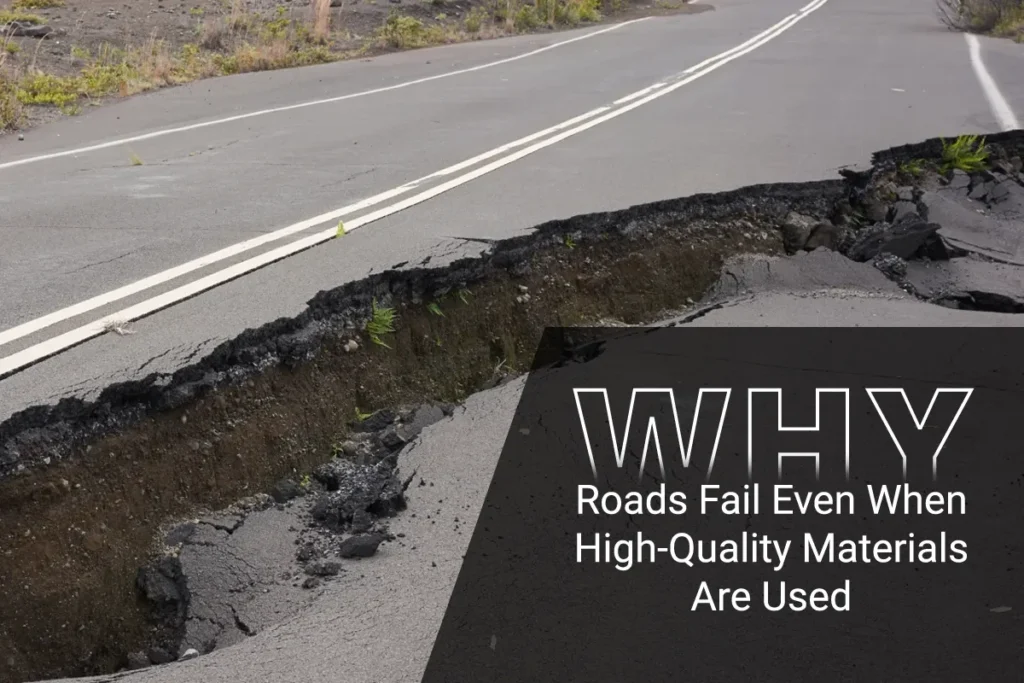
Using high-quality bitumen and aggregates does not automatically guarantee a long-lasting road. Pavement performance depends on the interaction between material quality, pavement design, construction practices, environmental conditions, traffic loads, drainage, and maintenance.
A road can therefore experience rutting, cracking, potholes, or premature deterioration even when the materials used meet the required quality standards. Understanding these causes can help contractors and infrastructure developers prevent costly failures.
Poor Pavement Design
One of the most common causes of premature road failure is inadequate pavement design. The pavement structure must be designed according to expected traffic loads, climate, soil conditions, and service-life requirements.
If the pavement is not strong enough for the actual volume of heavy vehicles, repeated loading can cause fatigue cracking, deformation, and structural failure.
Incorrect Bitumen Selection
High-quality bitumen can still perform poorly if the wrong grade is selected for the project.
Climate and traffic conditions should be considered when choosing the binder. A grade that performs well in one environment may not provide the same performance under extreme heat, heavy traffic, or significant temperature fluctuations.
Poor Mix Design
The proportions of bitumen, aggregates, and other components must be carefully determined. Excessive or insufficient binder content can negatively affect asphalt performance.
A properly designed asphalt mixture should provide an appropriate balance between strength, flexibility, durability, and resistance to moisture and deformation.
Inadequate Compaction
Even a well-designed asphalt mixture can fail if it is not properly compacted during construction.
Insufficient compaction leaves excessive air voids in the pavement, allowing water and oxygen to penetrate more easily. This can accelerate oxidation, moisture damage, and pavement deterioration.
Poor Drainage
Water is one of the biggest threats to pavement durability. Inadequate drainage can allow water to accumulate within or beneath the pavement structure.
Moisture can weaken the pavement foundation and reduce the bond between bitumen and aggregate, eventually contributing to cracking, potholes, and other forms of damage.
Heavy or Unexpected Traffic
Roads are designed for specific traffic conditions. If actual traffic volumes or axle loads significantly exceed the original design assumptions, deterioration can occur much faster than expected.
Heavy trucks and repeated loading can accelerate rutting and fatigue, particularly when the pavement structure is not designed for such conditions.
Read More: How Climate and Traffic Conditions Affect Bitumen Grade Selection
Extreme Weather Conditions
Temperature, rainfall, and other environmental conditions can significantly affect asphalt performance.
High temperatures can soften bitumen and contribute to rutting, while low temperatures can make the binder more brittle and increase the risk of cracking. Heavy rainfall can also accelerate moisture-related damage when drainage is inadequate.
Construction Quality Problems
Material quality is only one part of successful road construction. Poor workmanship, incorrect temperatures, inadequate surface preparation, improper joints, and inconsistent layer thickness can all reduce pavement life.
Quality control should therefore continue throughout mixing, transportation, placement, and compaction.
Lack of Preventive Maintenance
Even a well-constructed road requires regular inspection and maintenance. Small cracks and surface defects can allow water to penetrate the pavement and develop into much larger problems.
Early maintenance can prevent minor defects from becoming expensive structural failures and can significantly extend pavement service life.
Why Material Quality Still Matters
Although high-quality materials cannot compensate for poor design or construction, they remain essential to pavement performance.
Consistent bitumen quality, appropriate aggregate properties, and a properly designed asphalt mixture provide the foundation for durable pavement. The key is to combine quality materials with correct specifications, engineering, construction, and maintenance practices.
How SAEN Supports Durable Road Projects
At SAEN, we understand that bitumen quality is an important part of reliable asphalt pavement. As an international bitumen supplier, we provide bitumen solutions for road construction and infrastructure projects worldwide.
SAEN supports contractors, asphalt producers, and infrastructure developers with consistent products, suitable grades, and professional export coordination. By selecting the appropriate bitumen for the project’s climate, traffic conditions, and technical requirements, buyers can take an important step toward achieving better pavement performance. Contact SAEN for further information.
Final Thoughts
Road failure is rarely caused by a single factor. Even high-quality materials can produce poor results when pavement design, mix proportions, drainage, compaction, traffic requirements, or maintenance are inadequate.
The best approach is to treat pavement performance as a complete system. Selecting suitable materials, following proper engineering practices, maintaining quality during construction, and carrying out preventive maintenance can significantly improve road durability and reduce long-term costs.
For international infrastructure projects, partnering with a reliable bitumen supplier is another important part of maintaining consistent material quality throughout the supply chain.
Leave a Reply