
How to Reduce Procurement Risk When Buying Bulk Bitumen
Bulk bitumen procurement is a major investment for contractors, infrastructure developers, distributors, and government projects.
Since bitumen directly affects the durability and performance of roads and industrial applications, even small procurement mistakes can lead to serious financial and operational consequences.
Delayed shipments, inconsistent quality, incorrect specifications, or poor logistics planning can all increase project costs and create long-term maintenance problems.
For international buyers, reducing procurement risk is not simply about finding the lowest price. It is about securing reliable supply, ensuring technical compatibility, and protecting the overall success of the project. A strategic purchasing approach can help companies avoid costly disruptions and improve long-term performance.
Why Procurement Risk Matters
Bitumen is a temperature-sensitive product that must meet specific technical standards depending on climate conditions, traffic load, and application type. Unlike many standard commodities, bitumen performance can vary significantly if the wrong grade is selected or if the material is not handled properly during transportation and storage.
Many procurement issues do not appear immediately after delivery. In some cases, the consequences become visible months later through pavement cracking, rutting, or structural failure. This is why experienced buyers place strong emphasis on supplier reliability, quality verification, and logistics planning before finalizing any order.
Read More: How Climate and Traffic Conditions Affect Bitumen Grade Selection
Choosing the Right Supplier
One of the most effective ways to reduce procurement risk is working with an experienced and trustworthy supplier. Many buyers focus heavily on pricing while overlooking factors such as export experience, communication quality, technical support, and consistency of supply. However, these factors often determine whether a project runs smoothly or encounters costly delays.
A reliable supplier should be able to provide clear documentation, transparent commercial terms, and consistent product quality. Strong communication is equally important, especially in international trade where shipping schedules, customs procedures, and logistics coordination can quickly become complicated.
Long-term relationships with dependable suppliers also reduce uncertainty over time. Buyers who work repeatedly with the same trusted partner often experience better operational efficiency and fewer supply chain disruptions.
The Importance of Correct Bitumen Grade Selection
Another common source of procurement risk is selecting the wrong bitumen grade. Every project has unique technical requirements based on environmental conditions and expected traffic volume. A grade that performs well in one region may not be suitable for another.
For example, roads in hot climates require harder grades that can resist deformation under high temperatures, while colder environments require more flexible binders to reduce the risk of cracking. Heavy traffic highways may also require higher-performance grades compared to lower-traffic roads.
When buyers select bitumen based only on cost rather than technical suitability, the long-term consequences can be severe. Maintenance expenses often increase significantly when improper materials are used.
Why Quality Verification Is Essential
Quality verification plays a critical role in reducing procurement risk. Buyers should never rely solely on verbal assurances or general product descriptions. Before shipment, it is important to review technical specifications, Certificates of Analysis (COA), and quality documentation to ensure compliance with project requirements.
Consistent quality is especially important in large infrastructure projects where even small variations in material properties can affect performance. Professional suppliers understand the importance of transparency and provide proper testing documentation to support buyer confidence.
Logistics and Transportation Challenges
Logistics planning is another area where procurement risks frequently arise. Since bitumen is highly sensitive to temperature and handling conditions, transportation must be carefully coordinated from loading to final delivery.
Shipping delays, poor handling procedures, or incorrect packaging can all create operational problems. In some cases, improperly managed transportation can even affect the usability of the product upon arrival.
Buyers should carefully evaluate shipping methods, transit routes, storage conditions, and unloading capabilities before placing large orders. Working with suppliers who have strong export and logistics experience can significantly reduce the likelihood of delays and unexpected costs.
Packaging and Storage Considerations
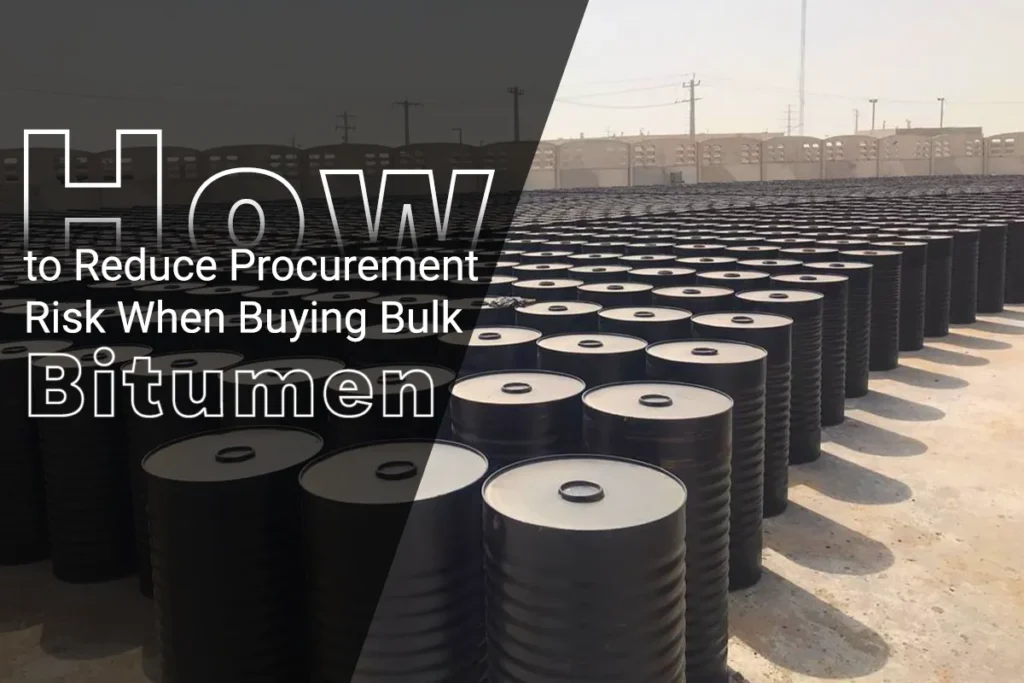
Packaging choice also affects procurement efficiency and product safety. Bitumen may be supplied in drums, jumbo bags, or bulk shipments depending on the destination, infrastructure, and project scale.
Each packaging method offers different advantages. Bulk shipments may reduce cost for large projects, while drum or jumbo bag packaging may provide greater flexibility in regions with limited unloading infrastructure. Selecting the most suitable option helps improve handling efficiency and reduce material loss during transport and storage.
Proper storage conditions after delivery are equally important. Even high-quality bitumen can face performance issues if stored incorrectly or exposed to unsuitable environmental conditions for extended periods.
Looking Beyond the Lowest Price
One of the biggest mistakes in bitumen procurement is focusing exclusively on the lowest offer. While competitive pricing is important, the cheapest supplier is not always the most cost-effective choice in the long run.
Professional buyers evaluate the total value of the procurement process, including product consistency, logistics reliability, technical support, and long-term pavement performance. A slightly higher initial cost may ultimately save substantial amounts in maintenance, repairs, and operational disruptions.
Reducing procurement risk requires balancing cost with reliability and long-term project success.
Read More: How to Verify Bitumen Quality Before Importing
How SAEN Supports International Buyers
At SAEN, we understand the challenges international buyers face when sourcing bulk bitumen for infrastructure and industrial projects. Our approach focuses not only on supplying high-quality products, but also on supporting clients throughout the procurement and logistics process.
We provide a wide range of bitumen grades for different climate conditions and applications, along with flexible packaging solutions and reliable export coordination. Our team works closely with buyers to ensure technical compatibility, documentation accuracy, and smooth international delivery.
By combining product quality, logistics experience, and transparent communication, SAEN helps clients reduce procurement risk and build more reliable supply chains.
Final Thoughts
Reducing procurement risk when buying bulk bitumen requires careful planning, technical understanding, and strong supplier partnerships. Buyers who focus only on short-term pricing often expose themselves to larger operational and financial risks later in the project lifecycle.
A successful procurement strategy considers product quality, climate compatibility, logistics coordination, documentation, and supplier reliability together. With the right approach and the right supply partner, companies can improve project performance, reduce unexpected costs, and achieve more stable long-term operations.
Looking for a Reliable Bulk Bitumen Supplier?
SAEN supports international buyers with dependable bitumen supply, professional export services, and technical guidance tailored to infrastructure and industrial projects worldwide. Contact our team today to discuss your project requirements and discover safer, more efficient procurement solutions.
Leave a Reply