
VG (Viscosity Grade) & CG (Cutback Grade)
In road construction and pavement engineering, selecting the correct bitumen type directly affects durability, workability, and long-term performance. Two commonly used classifications are VG (Viscosity Grade) and CG (Cutback Grade) bitumen.
While both are derived from petroleum bitumen, their composition, handling requirements, and field performance differ significantly.
VG — Viscosity Grade bitumen
Viscosity Grade (VG) bitumen is classified based on its viscosity at specific temperatures rather than penetration depth. This grading system provides a more reliable prediction of performance under real traffic and climate conditions.
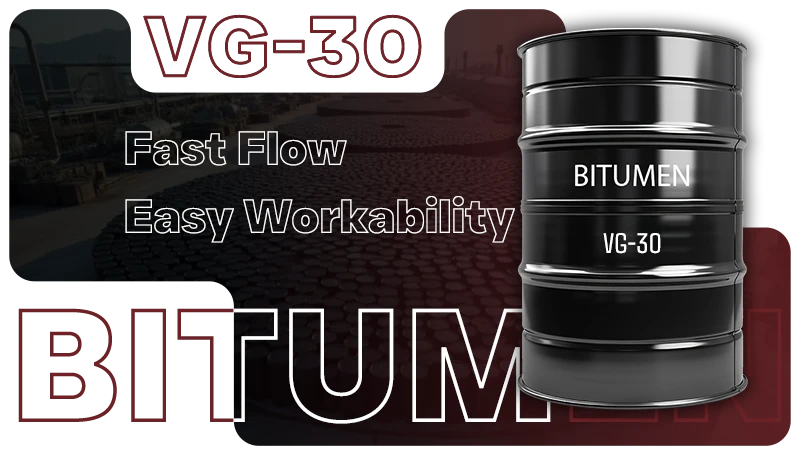
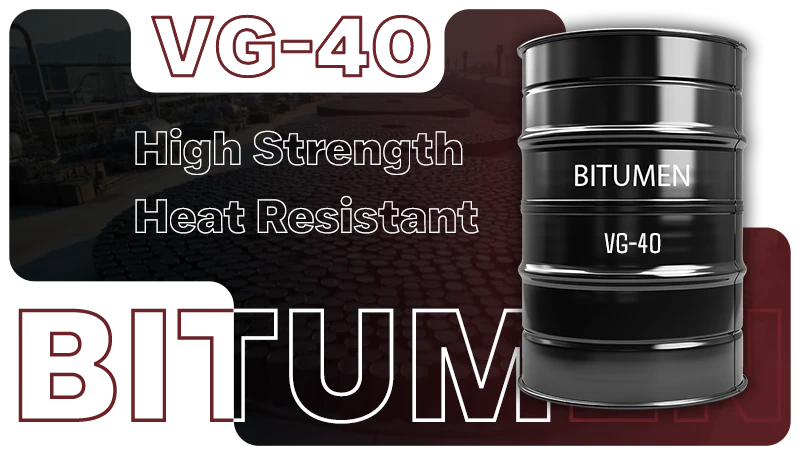
VG grades (such as VG-10, VG-30, and VG-40) indicate how stiff or fluid the bitumen behaves at mixing and service temperatures.
👉 Read full technical specification of Viscosity Grade (VG)
VG bitumen is supplied as a neat product, meaning no solvents are added. It must be heated before mixing with aggregates and during paving operations.

Why VG Is Widely Used
- Stable and predictable performance
- Suitable for heavy traffic pavements
- High long-term durability
- Better rutting resistance in hot climates
- Preferred for highways and urban infrastructure
CG — Cutback Grade bitumen
Cutback bitumen is produced by blending bitumen with a volatile petroleum solvent to temporarily reduce viscosity. This allows the material to be applied at lower temperatures without extensive heating.
After application, the solvent evaporates, leaving behind the bitumen binder film.
Cutback grades are commonly categorized depending on curing rate (Rapid, Medium, or Slow curing), which is determined by the type of solvent used.
Why Cutback Is Used
- Suitable where on-site heating is limited
- Ideal for remote or small-scale projects
- Quick application at ambient temperatures
- Useful for priming and tack coats
However, because the solvent evaporates:
- Emissions may require regulatory compliance in some countries
- There may be environmental concerns
- Long-term durability can be lower than neat VG bitumen
Technical Comparison: VG vs CG
| Feature | VG (Viscosity Grade) | CG (Cutback Grade) |
|---|---|---|
| Composition | Neat bitumen, no solvent added. | Bitumen dissolved in a volatile solvent to reduce viscosity. |
| Classification basis | Classified by measured viscosity at specified temperatures (e.g., VG-30). | Classified by formulation and viscosity with solvent; sometimes indicated by numerical codes. |
| Handling / application | Requires heating for mixing and paving. | Can be applied at lower temperatures; no or less heating needed thanks to solvent. |
| Durability | High long-term stability and durability when properly applied. | Good short-term workability; long-term performance can be reduced due to solvent effects and evaporation. |
| Typical applications | Asphalt mixes, road paving, heavy-traffic pavements. | Priming, tack coats, surface treatments, jobs where heating is difficult. |